
Field Briefing · RAFTRACK AWOLOWO SITE
Importance of PPE
Onsite safety support, risk management, and operational protocols for RAFTRACK AWOLOWO SITE.
Project Overview
Importance of PPE
Introduction: Personal Protective Equipment (PPE) refers to clothing or equipment worn by workers to minimize exposure to workplace hazards and reduce the risk of injury or illness. Examples include helmets, safety boots, gloves, goggles, reflective vests, ear protection, face shields, respirators, and coveralls.
Project Details
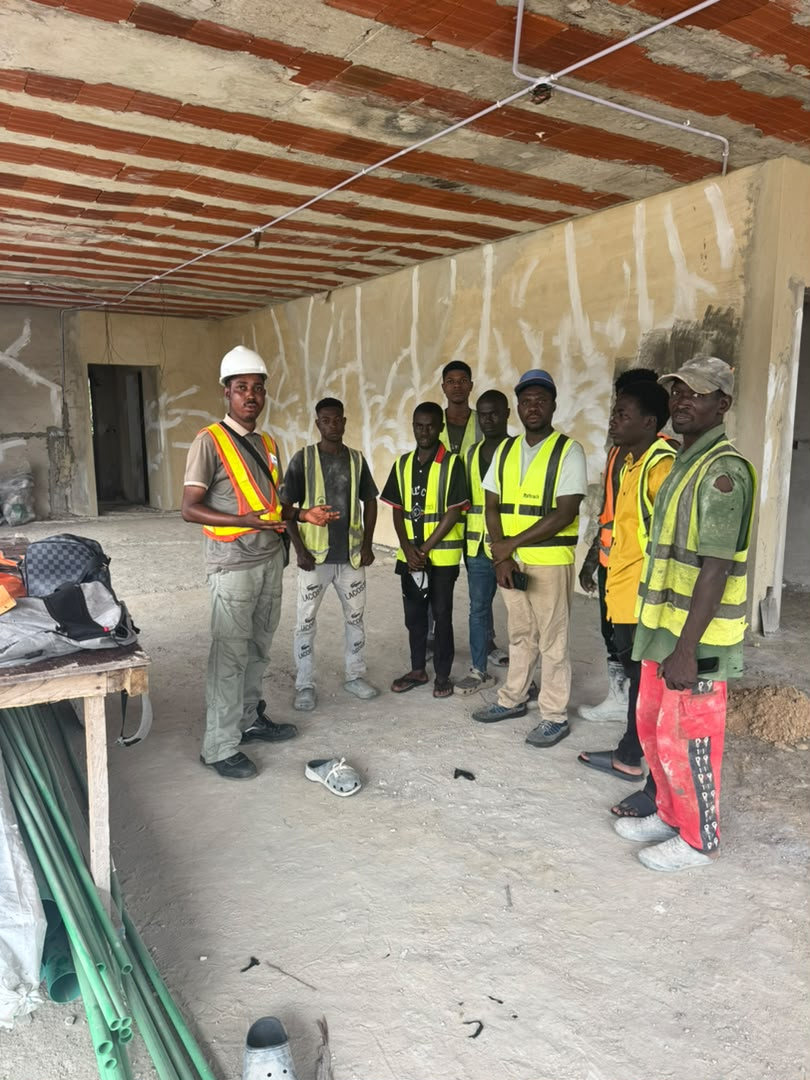
Key Points & Safety Guidelines
Detailed Requirements & Measures
Types of PPE and Their Uses:
1. Safety Helmet (Hard Hat) - Protects the head from falling objects and impact injuries.
2. Safety Boots - Protect feet from punctures, slips, falling materials, and electrical hazards.
3. Hand Gloves - Protect hands from cuts, burns, chemicals, and electrical contact.
4. Safety Goggles/Face Shield - Protect eyes and face from dust, sparks, chemical splashes, and flying particles.
5. Reflective Vest - Improves visibility, especially in busy work zones or low-light areas.
6. Ear Protection (Earplug/Earmuff) - Reduces exposure to harmful noise from machinery and tools.
7. Coveralls/Protective Clothing - Protects the body from dirt, chemicals, sparks, and minor abrasions.
Importance/Advantages of PPE: Protects workers from injuries and occupational illnesses. Reduces severity of accidents. Improves worker confidence and morale. Ensures compliance with site safety regulations. Reduces medical costs and lost work time. Promotes a safe working environment.
Proper Use of PPE:
1. Always wear the required PPE before starting work.
2. Inspect PPE before use for any damage.
3. Use PPE suitable for the specific task.
4. Keep PPE clean and properly stored.
5. Replace damaged or expired PPE immediately.
6. Never modify or misuse PPE.
People. Projects. Environment.